Archive for the 'doings' Category

Bahia Drake to Golfito

Wednesday, November 29th, 2006

According to Charlie’s Charts, there is one anchorage between Parque Manuel Antonio and Bahia Drake; it breaks the trip up into two nice day-long sails. We set out for Bahia Uvita under light wind and arrived about an hour to sunset with a storm about to dump on us and our wind about to die. Our charts show Uvita as a hammer-shaped lump at the end of the spit of land, thereby creating a little protected nook to anchor; Charlie’s doesn’t show the hammer but it has a little island and says that the exposed reef cuts the swell to create a mellow spot to anchor. In actuality, a storm at some point must have wiped out all land lumps and islands because now there exists only a blunt nub of land with a mile-long exposed reef sticking off the end. The swell comes over this and breaks up into billions of choppy wavelets that create a high-frequency barrage of wakes, thereby turning the anchorage into a godawful mayhem. We discovered this around the time the wind died, the sun set, and the rain started; so we stayed.

It was a rolly, lurchy, violent night and neither of us got the Beauty Sleep; by four or so the next morning, we climbed out of bed and staggered around the boat getting coffee started and trying to get the motor started. Naturally, the motor refused to start and managed only a choking cough sound every time its cord was pulled. We gave up on it and just pulled up the anchor under sail. With maybe two or three knots of wind and the frightful chop generated off the reef, “sailing” out of the anchorage was a vexing experience. We physically held the sails out to keep them from flogging and to try to hang onto what little air there was. At four in the morning we did this. An hour later, we were only 1/2 mile from where we started but we were just far enough around the reef so that we were fully exposed to the open swell; here, thankfully, it was calm enough for Joshua to take the carburetor apart without fear of falling overboard. By hour two, we were still within a mile of the anchorage (lame!) but the wind began to pick up (sweet!). Joshua, who is a fucking genius, actually got the motor running after whatever it was he did to the carburetor and we ran it for a while to give ourselves the impression of forward progress and until we were well out of the reef area. Then we killed it to sail under wind power.

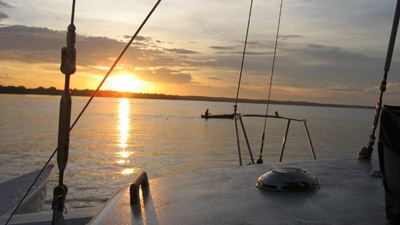
The sail to Bahia Drake actually turned out to be excellent after the rocky start; the wind picked up steadily until late afternoon when it peaked at around 15 knots (perfect wind for a beat) and we were flying through the relatively calm seas. We found a promising-looking scum line (yes, excitement abounds upon the Time Machine) and sailed along it for several miles while trailing delicious plastic squids through the water; sadly, the dorado shunned our lures and our dinner that night was not to consist of the Fish of Opportunity. (Actually, we did snag one skipjack but threw it back because that’s the only one I don’t like.) At sunset we entered Bahia Drake and anchored. The bay is lined with beautiful jungle hills, few scattered houses, no mega time-share high rises, reddish sand beaches, and several river estuaries. There were only a few fishing pangas and one other sailboat in the anchorage. The hills glowed amber and glass windows reflected gold in the setting sunlight.
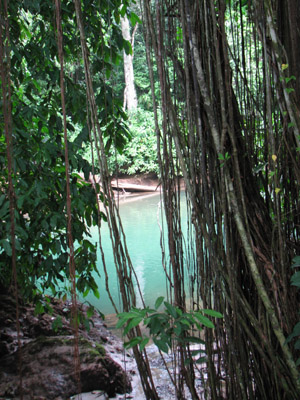
Mangrove Roots. Bahia Drake, Costa Rica

Bahia Drake turned out to be just as gorgeous by day as it seemed the night before. It is remote—the only way to get there often is by boat (yes, we rock) because the rainy-season creates some appalling jeep-swallowing ruts. It also is at the northern edge of the Corcovado National Park, which encompasses a large portion of the Osa peninsula and is one of the largest, most primeval, oldest, tallest, with the most abundant and unique flora and fauna, and a-few-other-things-else-est park in the entire world (if you believe everything you read). There is a small town with a medical compound complete with scrub-bedecked nurses prowling the local ‘sodas’ during the lunch hour and a few “eco-resorts,” which are schmancey hotels nestled amongst the jungle foliage rather than high-rising out of a cleared portion of it, with bars and restaurants and artful landscaping all around everything–and they also cost a bloody fortune. Eco-resorts are invariably owned and run by gringos. There is a trail running down the southern edge of the bay down the coast goes all the way around to Puerto Jimenez, but we followed it only until Bahia Pariaso, maybe six miles away. Along the way you keep feeling like you have left it all behind and I-hope-we-brought-enough-power-bars, but then another kilometer down, you stumble into a clearing where there is a tent camp and a running generator or something (you can hike all over the peninsula, tent camp to tent camp); this time of the year sees few tourists since it is still officially rainy season. We initially worried that we had set off on the hike without enough water but this turned out to be stupid because there were coconuts all over the place and those eco-tent-resort things every few kilometers. Periodically, we would collect a couple of coconuts and bash them open on the rocks (not easy) for the water inside, then continue down the trail munching on the nutmeat. (By the way, coconut husk juice splatters widely and stains badly.) (Oh, also, never eat too much fresh coconut meat because it, um, makes one’s intestinal tract slickery, if you catch my drift.)

suspended footbridge. Bahia Drake, Costa Rica

The third day, we had planned a leisurely kayak up one of the rivers at high tide, but when lowering the kayak into the water, the Cordura casing ripped and so, until we fix it, that is the end of the kayak. The wind started blowing so we just put our stuff away and took off for Golfito, located around the tip of the Osa peninsula inside the gulf. Mom was due to arrive in a few days anyway so it probably was best we had a chance to scope out the scene and stock up on martini ingredients.
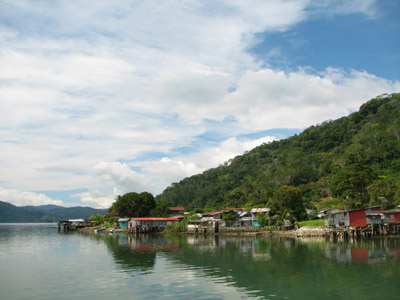
shoreline. Golfito, Costa Rica

The run to Golfito was an overnight run for us; we wanted to give ourselves a lot of time in case the wind was light and we made poor time. Typically I prefer the second and fourth watches. I dislike the first watch because, although I am infrequently tired right at 6 or 7pm, I fear the initial onset of darkness when we are sailing along into the night with all those night preparations and putting away of things and all that. I like to just try to go to bed immediately and forget about it all. Waking up at midnight for a three-hour watch seems less freakish to me. Jeff always called this the ‘Dog Watch.’ You just get up and it is already dark and you are disoriented because you just were woken up after getting very little fitful sleep but you go above after donning what you assume must be the appropriate clothing and look around and assess the situation, take over the steering wheel and resume. If I am lucky, there aren’t any squalls, I don’t have to do any extensive sail readjusting, don’t have to start the motor (and wake up Joshua because our motor is being lame lately and I don’t have the explosive strength in my arms to pull-start the bastard), and don’t fall asleep. About half the time this is true and I get through the watch without checking the clock on the GPS too many times and then I get to go back to sleep. I know I am really tired when I have a hard time keeping our course straight. Once back in the bunk and a groggy Joshua deposited back into the cockpit, I dream all sorts of confused weirdness; then I get woken three or four minutes later by a very tired Joshua. In reality, three hours have again passed and by now it is the morning shift. Joshua summons the last of his strength to report every light that has passed and how well he could see it and how our course has changed a whole 15 degrees because actually this is the most exciting thing that has happened all night and then he goes below and passes out cold. And I am again sitting in the cockpit blinking my eyes and wondering if there might be any cookies left.

Dawn happens about sixty billion hours later and this particular dawn, on that very uneventful night around Matapalo towards Golfito, the sun rose over heavily cloudy and obscured skies; then it rained. Very hard. I saw it coming and buttoned up the boat tight; then I popped open the umbrella and stood in our cockpit beneath the downpour, listening to the roar. The wind had died utterly and the water was mashed flat by the force of the raindrops but I just stood and waited another hour until Joshua woke up to get the motor started for the last mile into Golfito bay.
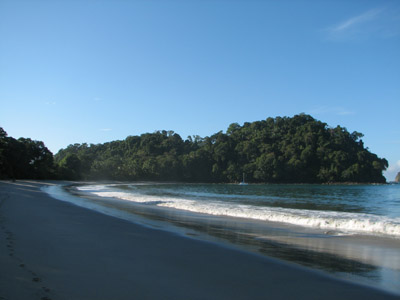
Parque Manuel Antonio

Tuesday, November 21st, 2006

Anchored at Parque Manuel Antonio, Costa Rica

In spite of, or probably because of, Margo’s (a.k.a. Mrs. Charlie’s Charts) less than ecstatic review of the Parque Nacional Manuel Antonio (i.e., gobs of people and she only saw white faced monkeys, wah!), we were terribly excited to arrive and get our anchor down. We were promptly rewarded with goodies too; the anchorage is right in the park, right off the prettiest beach, right in the lee of the spectacular “Punta Catedral,” and within clean earshot of the howler monkeys. There was also one funky odor that was a combination between mushroom and skunk. The entire park smelled like it and that first night had me following my nose all over the boat, sniffing at our “clean” laundry, at the dishtowel, at the pile of foul weather gear stacked on the bunk, at the bunk itself until I was mostly convinced the smell did not originate on the Time Machine.

We hopped in the water and swam to the beach to check out the late afternoon scene. People were set up with towels and swimming all up and down the beach (a fair amount of people, but not enough to be horrible). We wandered across the narrow jungly land spit over to the other side, where there was another lovely beach littered with tourists. Then the ranger started blowing his whistle: 4pm, the park is now closed! He herded people out with his whistle and we walked back to the other side to swim back out to the boat. Halfway out Joshua looked back to see one of the rangers standing on the edge of the sand looking after us, shrugging his shoulders to say “what the hell?” Ha ha! Safe back on the boat, we hung out and made micheladas with the last of our beer. We noticed that there was a crowd of mixed gringos and ticos (Costa Ricans) left on the beach, screaming and swimming and generally having a dandy time; the rangers totally ignored them and they stayed long after all the tourists left. After a while some of them swam out to the boat to see what was up with us. They were all volunteers, mostly young people from the UK, and Costa Rican guides; they all lived in a house inside the park. “Oh the park is gorgeous! You’ll love it! TONS of wildlife!” they said. I was stoked. Then we found out that the next day (Monday)–the day we thought we’d be heading in to do all that national park stuff–it would in fact be closed. Damn!

Ah well. Maybe we’d head into Quepos and restock our beer supply. However, the next morning we awoke to a downpour. Around noon when it finally did clear up, it was dreary and still. Since we were not feeling like motoring all the way around the point to town, we decided to spend the day toodling around in the kayak, since we could not go IN the park, we could just sort of go around it. We kayaked around the opposite inlet to an inlet two headlands away where we thought, from the chart, it might be possible to anchor. (After looking at it, it turned out that no, not good—rocky and not as protected as one might think, but fun for a kayak.) We actually saw a number of monkeys from the boat too: white-faced monkeys, which look startlingly like cats from a distance (and when you are nearsighted), and squirrel monkeys (which look like squirrels even to a person with 20/20 vision). We got quite a good look at the squirrel monkeys, the first couple we saw and got all excited about turned out to be the first of a large group and they spent a lot of time running up and down the branches of bushes and making huge leaps from tree to tree. These monkeys are tiny and adorable and very lithe. Joshua tried to record the leaps with the video function of our camera but captured mostly the insane lurching of the kayak.

The next morning we tied the kayak up under what we hoped was not the poisonous tree on the beach and walked back to the entrance where we could pay for some tickets (good little bunnies). Then we set out to spot some wildlife. Turns out it is not all that difficult, particularly where guides and tourists are abundant; you just look in the same direction all the other people are looking and you will be rewarded with an iguana, or monkey, or jesus lizard. By the end of the day we had seen nearly every animal we had heard mention of and had taken one and a half gigs of photos and video.

I was pretty jazzed about the squirrel monkeys the previous day but we have seen by now a lot of howlers and so monkeys were not exactly high on my list of must-sees. What were: SLOTHS. I was hell bent on spotting a sloth. A three toed sloth (were there others? Two-toed? Five-toed?). Whenever we passed a particularly excited group of people snapping photos at the underbrush, we’d eavesdrop to discover that alas, it was another lizard or something. After a while we were just hiking around the trails and we ran across a pair of Dutch tourists looking up. “Three-toed sloth,” they said. All right!

Except, I couldn’t see it. I did see a sort of funky growth on the tree. “Is it moving?” we asked. Well, they said, they thought they had seen it move maybe a few centimeters. If I knew anything at all about a sloth, it was not to expect aerobics. Then it did move. It very slowly and deliberately walked along a branch and up another branch; it was like watching a slow-motion film. Then it froze again and munched on some leaves. And it was cute! Sloths look like the Swedish Chef from the old Muppet Show. We watched her (she was a she, we later decided) so long that I had to hold my hand behind my neck so my head didn’t drop off backwards, then we finally moved on.

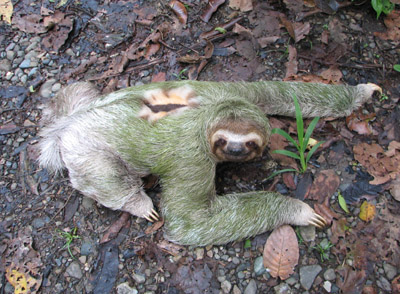
three-toed sloth. Parque Manuel Antonio, Costa Rica

By the end of the day I had completely satisfied my sloth-sighting quota because after a while we got our sloth-eyes on and had to but look up into the forest canopy and there one would be, dangling under a branch. By far the most amazing sloth encounter, however, was when we were walking down a dirt road on the edge of the park. I heard a rustle at the side of the road and a sloth all but tumbled down the embankment onto the road. Right in front of me! We had earlier overheard a guide explain that sloths are very easy to sex—the males have a black dot on their backs and the females don’t; this was obviously a male. “Black dot” is something of an understatement too: this thing is five inches long and looks like an evil eye; the fur is also a different texture and length. Anyway, this sloth just plopped down onto the road, looked up at us, then continued on across the road, utterly unconcerned by me or by any potential traffic there may be. What kind of self-preservation is that? And, while they may move slowly through the trees, they definitely move with finesse; on the ground is another story entirely. He lurched and tummy crawled with his long arms and short legs and those freaky curved claws across the gravel. We self-importantly escorted him across, Joshua shooting photos the entire time. Every so often, he’d swing his head over without breaking stride and give us a mild look. Finally when we got to the other side, he pulled himself up the first vertical thing available and was back in the trees.

I find it difficult to believe, but more than one guide told us that sloths come down out of the trees to go to the bathroom. They climb down, dig a hole, poop (slowly), then go back into the trees. During this time they are of course a sitting sloth for any predators, and they have all sorts of natural predators too: jaguars and other wild cats, big snakes, dogs, taxicabs, etc. I would think that tree-poopers would have been selected for by now so whatever purpose an energy-taxing and life-threatening ground-poop fulfils must be of utmost evolutionary importance.

white faced monkeys. Parque Manuel Antonio, Costa Rica

We didn’t see the squirrel monkeys again this day but we did see a large group of white-faced monkeys. These guys are a real crowd-pleaser; they come blitzing through en masse and they are ornery, snatch things from the tourists and each other, run up and down the trees picking at twigs and chewing on leaves, and from time to time, screech loudly and make everyone jump. We chatted with one of the guides while we waited out a white-faced monkey squall and he said that they were the most destructive of all the animals in the park; they tear stuff up, they harass the other slower animals (sloths), and they can get aggressive when stupid humans feed them snacks.

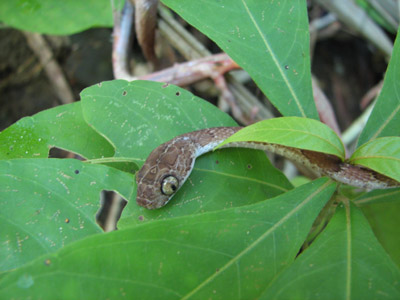
vine snake. Parque Manuel Antonio, Costa Rica

We watched one monkey find a thin brown vine snake, then bite into the middle of it, tearing off strips of meat. He ate only a few bites and then tossed the flailing snake aside (no regard for the starving monkeys over in India). The snake was alive but probably not for long. It was a pretty and very delicate little snake.

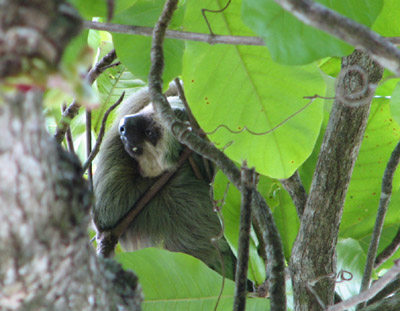
We also saw howler monkeys, TWO-toed sloths (sleeping in a tree; these guys are nocturnal and evidently more aggressive than their three-toed Swedish-chef cousins), an abunti (rodent of unusual size), iguanas, jesus lizards (those guys that run on water, like in Wild Kingdom), long-nosed bats (roosting in the tops of the poisonous trees), many morphos and other insects, coatis, raccoons, and a family of deer.

two-toed sloth. Parque Manuel Antonio, Costa Rica

[Two-toed sloth; from this photo he looks downright scary.]


Iglesia El Rosario, San Salvador

Thursday, November 16th, 2006

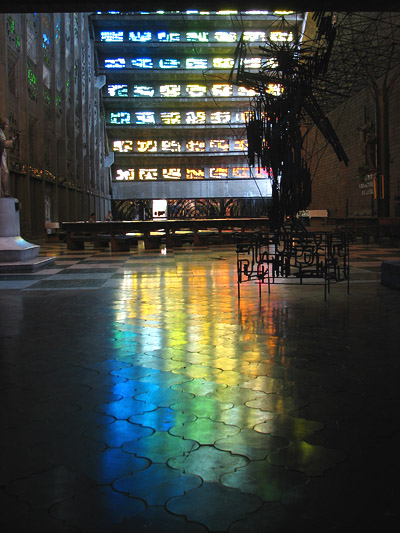
Iglesia El Rosario, San Salvador, El Salvador

San Salvador city center consists of a grid of bus-choked streets surrounding two open squares. There are a couple of cathedrals and loads of pigeons. Here you can see some of the few remaining old colonial buildings, partitioned at street level into tiny electronics shops and pharmacies and such. Against all of the buildings are lean-tos and escaped market stalls made of wood, black plastic, and corrugated metal sprawling out from the official confines of the mercado. They take up every spare inch of sidewalk and extend into the streets, making walking a nerve-jangling experience with all the taxis and busses rushing past. There are people absolutely everywhere, no foreign tourists that we ever saw, and a lot of good pupusas to be had.

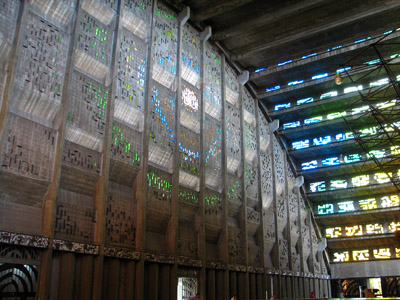
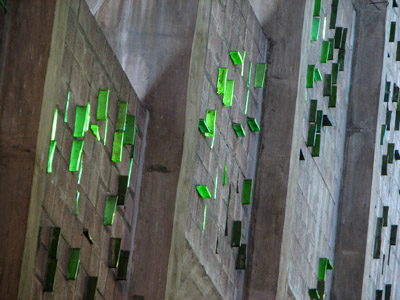
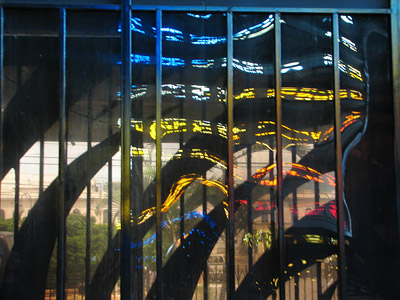
Our favorite thing about the city center is the Iglesia El Rosario, the most atypical cathedral I’ve ever seen. It is a huge cavernous building shaped sort of like an up-ended tuna can half submerged in the ground. From the outside, it just looks large and weird. And very very dirty. The inside, however, is amazing. Embedded in the concrete structure are thousands of shards of colored glass arranged by color and reflecting off the walls and floor into the dim interior. Inside it is cool and there is a dull roar from all the traffic outside punctuated by loud echoing creaks and bangs from the doors closing, benches being dragged around, or whatever. All the religious iconry has been welded together out of scrap metal. Angels with wings made of hundreds of rusty nails, sprocket halos over tangled-wire faces.

Iglesia El Rosario, San Salvador, El Salvador

Iglesia El Rosario, San Salvador, El Salvador

Iglesia El Rosario, San Salvador, El Salvador


El Salvador

Thursday, November 16th, 2006

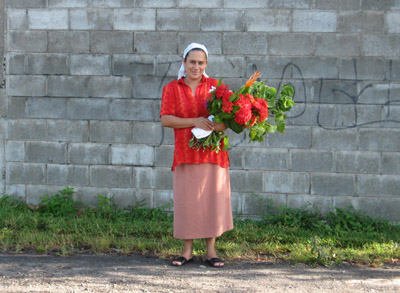
woman with flowers. El Salvador

[Jeff took this photo of a woman near where we kept the boat; she was waiting for the bus.]

For having the Time Machine in El Salvador four and a half months, I’ve said embarrassingly little about it, blogwise. I guess I didn’t really know how to cover all that was going on around us every day, because it wasn’t just one thing to describe or one event where I may have made an ass of myself that I needed to tell everyone. There were so many things. And so many different ways I made an ass of myself.

If I had to sum up the whole of the country with a few words, I’d have to say the thing that struck me the most was the unbelievable friendliness of the people. However, I’m generally not one for using only a few words. And, I know I say this about everyplace we go: Oh, the people were SO nice, blah blah. There is a huge class divide in the country: the very rich and very conspicuous consumers and then the very poor, which of course is by far the majority of people in El Salvador. Most we met lived in tiny houses built out of scavenged parts, had swept dirt floors, and had wood-fire cooking hearths. It has been only less than a decade since the civil war ended (it went on for around twelve years) and clearly economic and political tensions remain. And yet nearly everyone we met was courteous, nice, extremely helpful, and genuinely curious about what the hell we were doing there.

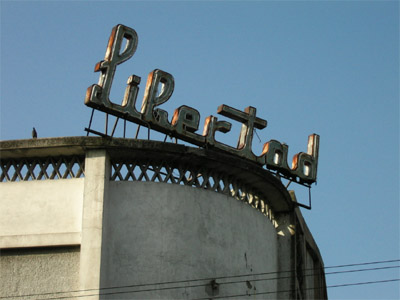
Libertad Sign. San Salvador, El Salvador

In San Salvador, a city cram packed with people on the streets, people being moved around in diesel-spewing ex-American school busses, and just major mayhem almost everywhere you look, we frequently were approached by random people to chat. Many of them just want to know where we are from because they have a relative or some connection with the States (it is assumed generally that we are Americans) and they love to list off the names of the US cities where a daughter or a cousin lives. Los Angeles, Houston, Chicago. One woman who started talking with us was all but scandalized when she found out we were staying in such-and-such a hotel. She got out a pen and paper and wrote down her home address and telephone, then the telephone and address of her work, also a number of some friend where she might also be if not at home or work, and finally a schedule of hours where she should be at all times of the day, just in case. If we looked confused at any time on the street, some lady would approach us and ask if we needed directions or help. Immediately four or five women would crowd around, and every one of them would have an encyclopedic knowledge of the convoluted San Salvadorian bus schedules and they would all argue over which route was the best, since there seemed to always be about a million different ways to do everything in that city.

Buses were also awesome for people watching as well as actual people interacting. One guy, a schoolteacher on the Puntilla (the end of the land near the entrance of the estuary where we kept the boat), struck up a conversation with us. “Elvis,” he said, “Graceland,” and he nodded giving us a knowing look. This of course came out like, “Ale-vees” and “Gros-ay-land,” and it took us a minute to figure it out. He said he would very much like to visit the US if only so he could visit Maim-feece. He showed us his notebook, which had Elvis on the cover; on the other side, he had pasted in an image of Marilyn Monroe. Another time, on a packed bus, a young girl was standing in the aisle outside of the seat where Joshua and I were sitting. She stared at us for a minute or two and then pointed at Joshua’s shirt and said, “shirt.” Then smiled. She then went on to list our surroundings, “Woman, bus, red, tree, music,” while we repeated the words and others in Spanish. “Bye,” she said when she got off. Usually, I ended up sitting next to older women who would always ask me whether I had any children, and how old I was. Once they confirmed that Joshua was indeed my husband, they would always let me know that it of course wasn’t too late, but that I had to get a move on. One woman even reached over and patted my belly when she told me this. It wasn’t only the women who were concerned at my lack of offspring; men would also be sure to tell me so as well; it wasn’t just some woman thing.

We spent a lot of time on busses in El Salvador, also. Curiously, everyone we met NOT in El Salvador said of the place, “Oh, El Salvador is so dangerous. You, being a foreigner, must really be careful. Don’t ride busses, especially—those are the worst.” Well, maybe we were just lucky but we never had any problems unless it was getting correct change back from the cobradores (the money-taker dudes). Almost always the cobradores were helpful and not only sure to tell us if we had the right or wrong bus, but would often lead us around to where they could point out where to stand to catch the right one. Busses were almost always decommissioned school busses from the US, often downright antiques. They were always fitted with a bar running the length of the ceiling over the aisle to hold onto, plus extra seats were added where they could be, like in front next to the bus driver or on top of the engine hump. Usually the outsides were decorated with fancy mud flaps, chrome paraphernalia, or painted with Dios slogans. The insides were always, always decorated. The most popular themes being large shiny stickers of cartoon characters (generally Warner Brothers) with twee sayings like, ‘Even though you may be far away, remember that I will always love you and hold you close to my heart;’ dangling stuffed cartoon characters (also usually Warner Brothers—I’m talking Tweety and Yosemite Sam and the like); and those spring-loaded hair clips things—I have no idea why—like, dozens of them clipped all around the rear-view mirrors and up and down the window frames and stuff.

The bus driver always has control of the music situation and would either play reggaeton (a latin combination of reggae and hip-hop with an omnipresent beat) or thee schmaltziest, most painfully awful early 80s lite rock ballads. And they always play it loud. Hits like “She’s Like the Wind,” “Cherish the Night,” and “Total Eclipse of the Heart.” Plus a LOT of Bryan Adams, “I Do it For You,” or whatever that one is called—by far my personal least favorite song in the entire planet, particularly the live duet featuring some Celine Dion clone, a most nauseating version.

The cobrador’s job is to collect passengers and then collect their fares. We figured they must be paid some sort of percentage of what they take because they all but jump out of the moving bus and grab people off the street to fill the bus. Wait, actually they DO do that. They hang out of the open bus doors as it barrels down the street shouting and whistling while the bus driver honks all over the place. The bus will always stop for a passenger and while it is still braking, the cobrador is out the door in order to hustle the person onto the bus as fast as possible. The moment the passenger’s foot touches the bottom step of the entry, the cobrador slaps the side of the bus twice and the driver hits the gas. The cobrador swings on like a monkey as the bus roars off using an elaborate system of bars that have been welded around the doorway. They are true artists of brinkmanship and prefer to wait until the absolute last moment to snag the bar and swing back onto the accelerating bus. I always secretly hoped I’d see perhaps a green one get left behind and would imagine him running behind the bus yelling, passengers staring. Sometimes they would slap the bus and swing not into the front door but wait until the bus was almost past to snatch up the rungs outside the back door. I never saw one left behind. Once on the bus, it’s up to the new passengers to keep themselves from flying headlong down the aisle no matter if it’s a little old lady or a mother carrying a kid or what. When it’s time to get people off the bus, the cobrador does whatever he can to facilitate this exit, snatching up luggage, market baskets, kids, and depositing them swiftly on the side of the road.

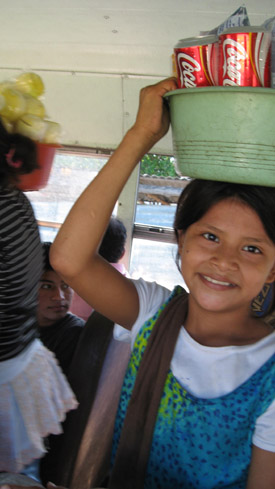
young girl vendor on the bus. El Salvador

Then there are the bus vendors. They congregate in certain towns and at major crossroads and all load up on the bus with their plastic bins of pupusas, sodas, coconut water, candies, fried fish, sandwiches, chips, oranges, cut-up veggies, bags of plums—pretty much everything. They all have their own calls: “Quiere pupusas!” “Quesadillas le doy!” “Naranjas dulces!” Sometimes they would get on the bus and deliver an entire sales speech; one guy had wallets and keychains with lights in them and he went ON, detailing all the kinds of things you could put in this wallet. Another particularly successful salesman always had some crazy Japanese treat—gummy pops of anime characters or something—and he would go on about all the delicious flavors and how they were all colors of special and when he got around to selling them, he would sell them all. Every time.

There are only a couple things of note regarding El Salvadorian costume. In general, they dress pretty normal, similar to what you might see elsewhere in Central America or Mexico; we never noticed any specific regional dress like you see in Guatemala, for example. The men seem to favor soccer shirts of their favorite teams (soccer–“football”–is huge, as it is everywhere in the world outside of the US). Women (younger, that is) don’t seem to dress particularly modestly; for example, tube tops seemed to be popular—especially with the larger set. Market and street vendor women always wear these elaborate frilly aprons with bows and ruffles and pockets across the front. The aprons are longer in the front where the pockets are and wrap ruffles all the way around the waist. I’ve never seen them elsewhere and every single women involved with food vending wears one. One more thing: El Salvadorian women, particularly the older women, do not travel anywhere without a towel. They always have one slung over a shoulder, which they use to cover baskets, wipe sweat from their faces, pad their head if they carry stuff, etc. Douglas Adams would be proud.

Our boat was anchored in an estuary (Estero de Jaltepeque) way down off this narrow point of land and there were no towns of any real size anywhere nearby. There were a number of local people who lived there but the majority of land was owned by rich San Salvadorians who had vacation homes, plus a few resort hotels here and there (also catering, it seemed, primarily to wealthy San Salvadorians). During the weekdays, it was dead quiet but on weekends, the hotels and vacation houses would fill up and people would arrive with their extended families to tear shrieking around the estuary on rented jet skis and cruise around in little power boats. The music would pump loudly out the loudspeakers at the hotel and at night you could hear off-key karaoke coming from somewhere near the naval station. During the weekends, our favorite restaurant Mar y Sol, which was located on a breezy dock stretching out over the estuary, would open and we would unabashedly eat there every meal.

Mar y Sol was run by a family and the spokesperson for the cruisers was Teresa, the cute, dimpled twenty-something daughter who waited tables. She had just started taking a weekly English class in San Salvador when we were getting ready to leave and would now and then say “bye” or carefully pronounce your bill in English, then giggle, embarrassed. She often charged us different prices for things and sometimes forgot dishes we had ordered but she was a sweetheart and very judicious with all the awful Spanish she had to endure when we talked with her. It was hard to stay irritated at Mar y Sol for anything because of her.

Living on the estuary in the boat was often boring and always incredibly hot. Mornings generally were still and the early sun would drive us from the cabin by 7am where we would sit in the cockpit crammed into the only shady corner squinting up and down the river watching the action (not a lot, usually). Luckily, the boat provided tasks right and left and we spent our days sanding, painting, sanding, repairing, and sanding. The river had at times several knots of tide and the boat often sounded as if it were underway with the rushing water. Aside from one day at La Paz where we were testing out the bote motor mount, this was the first time we really used the outboard on the dinghy. Rowing against a six-knot current is really tough. At night it was generally breezy and all the major clouds that had built up around the volcanoes during the day started flickering and moving around. During July, every night we got a major thunderstorm that came roaring up the estuary. All would be still and then within five seconds, the temperature would drop ten degrees as a blast of storm air hit, smelling of electric mixer and pine needles. The boat would vibrate and the rigging would scream. We would leap up from bed or eating dinner or whatever we were up to at the time and run around the boat, removing our shade structure lest it get blown to shreds, securing all our miscellaneous deck clutter, pulling the dinghy up onto the ama (lest it gouge a hole in the side of the boat with its evil rivets). Then we would climb below and listen to the noises and the pounding rain, peeking up periodically to make sure we hadn’t moved or to watch with fascination at Angel, George’s boat, flying around as if underway. The squalls lasted usually an hour and then everything would quiet down again. Sometimes there would be two or three per night; mornings were always clear and beautiful.

Bahia del Sol, despite the scary bar entry, turned out to be a really good place for us to keep the boat in a lot of ways. We were able to leave the boat on our own anchor the entire period (although moorings were available as well) and have Santos, a local guy, keep an eye on it when we were away. We could not have found a less expensive alternative anywhere else. The biggest drawback for us was the bar, which kept the estuary from being a place you could just enter and exit at leisure, and the curious and oftentimes uncomfortable political climate created by the “landed interests” (as one of the cruisers put it) clashing with the locals and each other. After the mysterious generator heist (which, upon investigation, turned up alleged ‘evidence’ pointing toward the conspiracy theory), we were ready to leave.

Estero de Jaltepeque aka Bahia del Sol, El Salvador


Why do I get the feeling I’m spamming my own website…

Monday, November 13th, 2006

We arrived in Bahia Ballena after a lengthy lull in internet activity and I have a number of back-logged posts.

Anyway, we took two overnight trips to get from Playa Tamarindo to the inside of the Nicoya peninsula. The first stretch to Bahia Samara was exceedingly irritating as we were beating up into the wind into a medium-sized swell, with steep wind-chop and a current against us. Night found us dodging rain clouds (a losing battle as there were too many to avoid) and tacking all over the place. Come morning, I swear we were still within eyesight of where we had been the night before when the sun went down. It took us 24 hours to go only around 50 miles and we had reasonable wind the entire time. We were pretty skeptical as to the quality of the anchorages of either Samara or the more popular Carillo because we had a south-southwest swell and wind direction, but we decided to nose into Samara and check things out; if too bouncy, we’d just head on. At low tide, Samara was fine and we stayed the night. Town was cute and packed with German tourists (easily spotted on the beach in their speedos).

As the tide rose and the swell washed over the reefs, the anchorage got bouncy and by the next afternoon, we were feeling very much ready to head on. We left at 4pm in order to time our landing in Bahia Ballena during the morning and set out right into a major rain squall, which happily had the effect of flattening the sea out a little and making the ride easier. The wind was again coming right from where we wanted to go and we again tacked back and forth. Naturally, each tack felt like we would make better directional progress on the other tack and so there was much activity during my watch switching sides, back and forth. Finally the wind died and we bobbled around until I couldn’t stand it anymore and started the outboard.

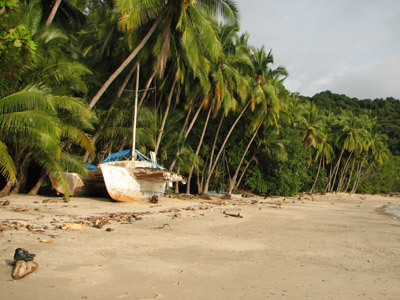
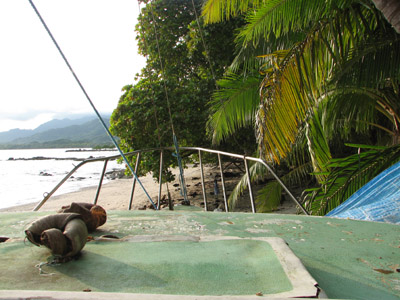
We arrived as planned in the morning to a large, well-protected bay; on the southern side is a small pier where they unload fish daily (so far the catch has been dorado) and two small villages. Across the bay is another small village and on the north side, a small white beach with a wrecked sailboat lying under the palms. We spent the first night over by the pier and then moved over to check out the wrecked boat.

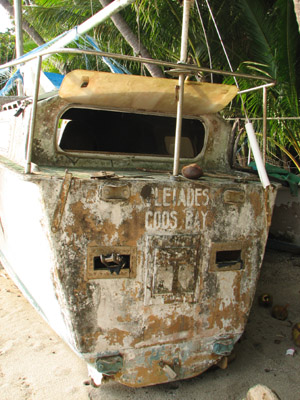
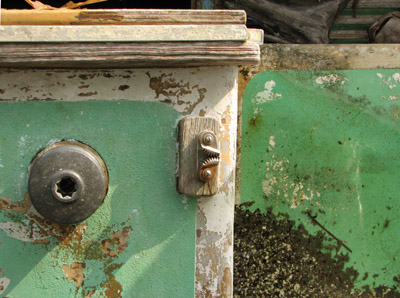
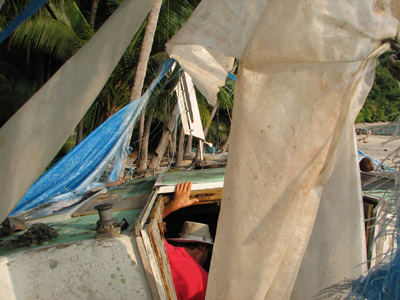
As we neared the beach, we realized that the wrecked boat was a Jim Brown—possibly a 37 or 40-footer—and with one ama completely torn off, it was in pretty bad shape.

Pleiades wrecked Searunner 40. Bahia Ballena, Costa Rica

Pleiades wrecked Searunner 40. Bahia Ballena, Costa Rica

Pleiades wrecked Searunner 40. Bahia Ballena, Costa Rica

Pleiades wrecked Searunner 40. Bahia Ballena, Costa Rica

Pleiades wrecked Searunner 40. Bahia Ballena, Costa Rica

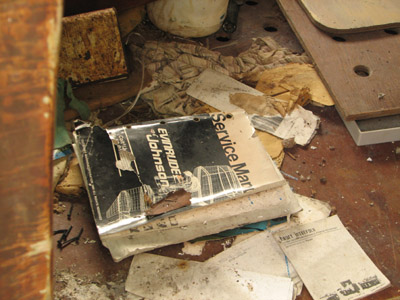
The boat was a total mess with ants crawling all over it and wasp nests dangling from the cabin ceilings. We found molding charts from all over the world and soggy publications dating from the late 70’s, addressed to someone in the Physics Department of University of Oregon. We chatted a bit with a local guy on the beach and he said the boat belonged to a guy named ‘Heart’ who lived just up the hill above the beach.

The name ‘Heart’ rang a bell; Joshua’s dad once told a story about when he was building his Brown 40 in Gold Beach during the late 70s. One day a guy appeared in the doorway of the boat shed; he had long wild hair and a scraggly beard and was dressed in oilskins. Joshua’s dad said he looked like some kind of mountain man. The man introduced himself as Heart and had come by because he was also building a Brown 40. He had a bit of land and he started a commune on it; anyone who wanted could come and live there for free, they just had to help him build his boat. Heart had said he was an inventor, made inverters. The next day we went up to the house and discovered that this Heart was indeed the same man, with long white-blond curly hair and a beard. And he remembered Joshua’s dad and his boat in Gold Beach.

We found Heart in his office, surrounded by computers and parts and wires and piles of taken-apart inverters. “Oh hey! Let me just get some pants on here!” He told us that they built the boat on a commune near some tiny town in southern Oregon. They constructed it in three pieces since they were considerably inland—the center hull and the two amas—then when they were ready, they rolled them down the hill on logs from their property to a truck where they were moved to the Umpqua River. He then spliced the main strength bulkheads together making the boat one single piece and launched it into the Umpqua. Upon completion, they floated the boat down to the sea and set out around the world with three families aboard. Aboard were he and his wife and their four kids, another family who was pregnant and had a small child, and a third family with a breastfeeding baby. After a few years, they made it as far as Panama and decided to stop for a while in Costa Rica. And he’s been here with his family (nine kids in all) ever since. The boat was broken apart in a storm three years ago and he says he has plans to fix it back up but, “you just get to doing different things, you know.”

He runs Heart Industries (or whatever it’s called) out of Costa Rica, does R&D from his home on Bahia Ballena and he says they have a factory near San Jose. “What kind of inverter you have there on that boat of yours?” he wanted to know. We also met his wife, Honey, and his 17-year old son; their daughter Eden owns the Ballena Bay Yacht Club bar and restaurant across the bay. Honey is responsible for organizing the organic produce market held in the yacht club every Saturday, which sounded absolutely awesome—she went on about the beautiful herbs and vegetables and whole grain fresh breads and goat milk yogurts and homemade cheeses they always have. Oh man, I was decidedly bummed to have missed it.

We left the Heart home and wandered back down the beach to where our kayak was waiting underneath the remaining wing of the rotting tri. It seems odd and sort of sad to see it there and think about how much life went into that boat, both in building it and living and traveling on it. But maybe it isn’t, you just get to doing different things and Heart appears to be right where he wants to be, surrounded by his family with the Pleiades resting on the beach in front of his house.

Pleiades wrecked Searunner 40. Bahia Ballena, Costa Rica


Cheyenne Weil, Joshua Coxwell